
What a Day of Dependabot PRs Taught Me About Hidden State, Codex Sandboxes, and Avoiding User-Specific Installs
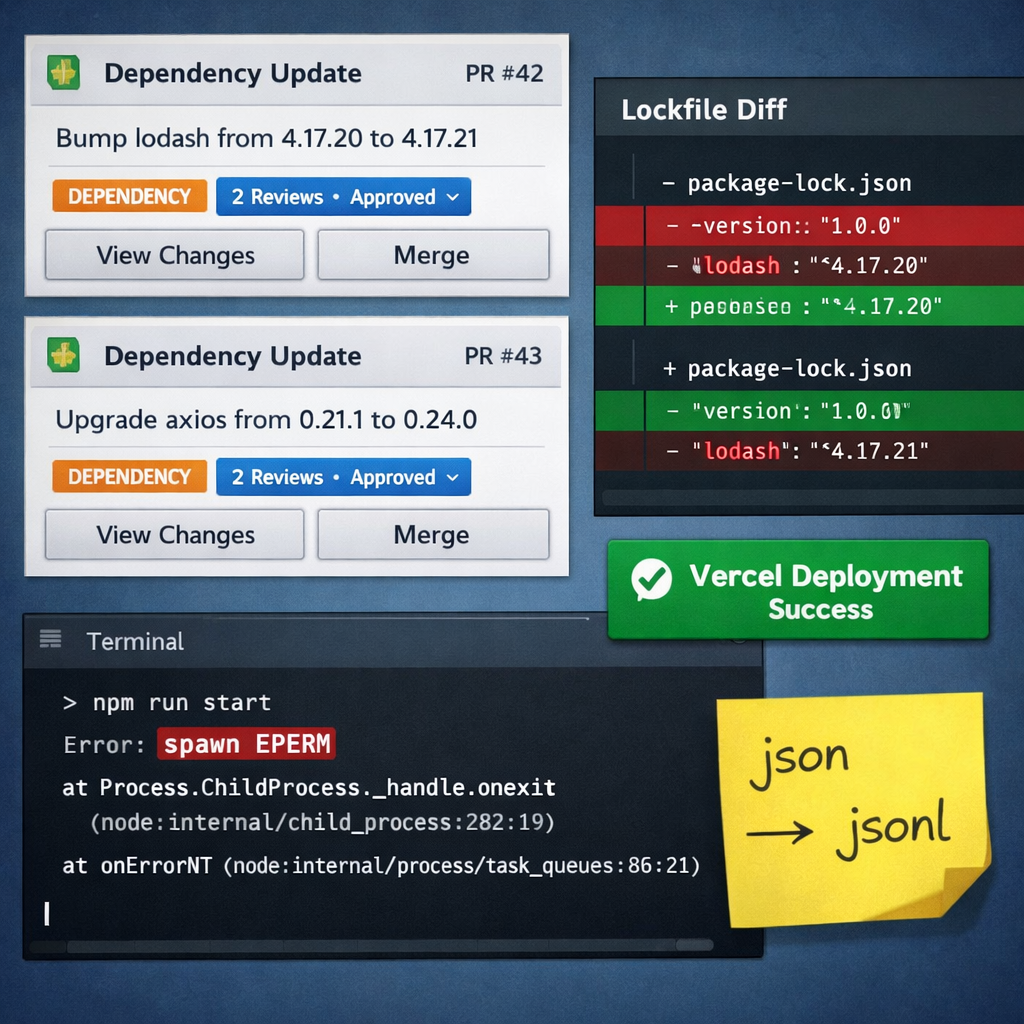
I started today expecting to review two normal Dependabot PRs, one in chronomation and one in jorild-se.
Instead, I ended up fixing a broken lockfile, migrating my shared memory store from JSON to JSONL, debugging Vercel access, and tightening a few rules about how I want Codex to work inside my repos.
That happened partly because Codex is stricter than the setup I had been using in Windsurf. The sandbox pushed back sooner. It blocked more things by default. It made environment assumptions visible instead of letting me glide past them.
That was frustrating in the moment. It was also useful.
I also had to re-set up the GitHub MCP, since Codex handles it quite differently than Windsurf does and that likely took half an hour of manual debugging as Codex kept pointing me in the wrong direction.
The dependency PR was only the visible part
This is the pattern I keep seeing with dependency work: the version bump is the visible change, but it is rarely the whole job.
The real work is everything around it:
- checking that the repo is using the package manager it actually expects
- making sure the lockfile still describes a complete install graph
- separating source-level failures from environment-level failures
- confirming that local validation and remote validation are telling the same story
- writing down repo-specific rules so I do not repeat the same mistakes next time
One of the smallest fixes from today was also one of the most valuable. In jorild-se, I added a repo-local note that the repository uses npm, not pnpm:
# Repository-Specific Exceptions- Package manager: use `npm` / `npm.cmd` for install, format, lint, and build commands in this repository.- Do not use `pnpm` for repository workflows unless the user explicitly asks for it.That is not glamorous work. It is also exactly the kind of guardrail that saves time when a repo is touched by another developer, another machine, CI, or an AI agent.
The stricter sandbox exposed the hidden state
The deeper lesson was not really about Dependabot. It was about hidden local assumptions.
Throughout the day I kept tripping over tools that technically existed, but only in ways that were specific to my machine:
pre-commitinstalled under my user-level Python environmentpnpmgoing through Corepack state underAppDatanpmand pip temp/cache paths landing in user-profile locations- a shared Memory MCP store living under my own user directory
None of that is ideal if the goal is a reproducible workflow.
Codex kept surfacing those assumptions because it could not casually lean on the same user-profile state that I tend to tolerate in a looser setup. In practice, that gave me a much sharper version of a rule I already believed in:
avoid user-specific installations whenever you can.
I would broaden that after today:
avoid user-specific installs, user-profile caches, and undocumented machine-specific state.
If a workflow only works because I happen to have the right thing in %APPDATA%, AppData\Local, or some remembered shell setup, then the workflow is not actually healthy yet.
This showed me the difference between local friction and real failure
The jorild-se PR is where the most concrete debugging happened.
The first issue was easy to spot: @typescript-eslint/eslint-plugin had moved forward, so I aligned @typescript-eslint/parser with it instead of leaving them skewed:
{ "@typescript-eslint/eslint-plugin": "^8.57.0", "@typescript-eslint/parser": "^8.57.0"}That mattered, but it was not the real blocker.
The real blocker was the lockfile.
At one point the PR branch ended up with a much smaller package-lock.json than the healthy graph. The reduced lockfile had dropped concrete runtime packages such as detect-node-es and intl-messageformat, even though downstream packages still expected them through use-sidecar and use-intl.
That is exactly the kind of problem that can look fine until a remote build uses the lockfile literally. It happened due to Codex initially trying to use pnpm over npm, global rules, as the repo exception wasn't yet present.
Locally, I kept seeing a different kind of failure. next build would compile successfully, finish linting and type-checking, and then die later with spawn EPERM inside the Codex sandbox. That signal was useful, but it was not the root cause of the broken deployment.
At this point I needed the Vercel MCP to facilitate debugging and of course that didn't work in Codex yet for me, so I had to handle that.
Vercel was what exposed the real failure:
Can't resolve 'detect-node-es'Can't resolve 'intl-messageformat'
That distinction mattered a lot.
One lesson here is that a strict local sandbox and a strict remote deployment are useful in different ways. The sandbox told me, "your workflow still depends on permissions and user state." Vercel told me, "your lockfile is lying."
Both signals were valuable. They just answered different questions.
Once I restored the full npm dependency graph in package-lock.json, the replacement Vercel deployment went green and the PR became safe to merge.
The memory-store migration made the same point at a different layer
The other thread from today was not a repo PR at all. It was my shared Memory MCP setup.
I had rebuilt the store as server-memory.json, which seemed reasonable on the surface. But the current @modelcontextprotocol/server-memory expects newline-delimited JSON records in a JSONL file, not one large JSON document with top-level entities and relations.
The important nuance was this: the upstream package can migrate from memory.json to memory.jsonl, but only if you let it use its default behavior. If you explicitly point MEMORY_FILE_PATH at a custom path, it uses that path as-is.
So this:
[mcp_servers.server_memory.env]MEMORY_FILE_PATH = "C:/Users/nicol/.agents/memory/server-memory.jsonl"is very different from pointing the same setting at server-memory.json and hoping the server will "figure it out."
That migration ended up touching more than one file:
- the actual shared memory store
- Codex config
- Windsurf MCP config
- the sync script that rebuilds the store
- the documented path in my own global rules
In other words, the problem was not just "wrong file extension." The problem was hidden toolchain state spread across multiple user-specific config locations.
Again, that is the same lesson: if important workflow behavior lives outside the repo, it needs to be explicit, portable, and consistent.
What I am changing after today
I do not think the answer is to make every environment painful on purpose. Friction by itself is not a virtue.
But I do think stricter tooling is useful when it exposes vague process.
After today, these are the habits I want to keep:
- One package manager per repo, stated explicitly in the repo.
- One authoritative lockfile produced by that package manager.
- Repo-local instructions for anything an agent could reasonably get wrong.
- Fewer dependencies on tools that only exist in my user profile.
- Remote validation treated as part of the truth, not as a formality.
- Shared tool config kept consistent across Codex, Windsurf, and any sync scripts around them.
That is the practical version of repo hygiene for me now.
The broader takeaway
I started the day thinking I was doing dependency maintenance.
What I was really doing was workflow maintenance.
The version bumps were just the trigger. The useful output was a clearer picture of where my process still relied on local convenience instead of explicit, shareable rules.
AI agents are very good at exposing that gap. They hit the undocumented corners immediately. They find the repo rule that only exists in my head. They find the tool that only works because I installed it for myself six months ago. They find the config path that one app updated and another one did not.
That can be annoying. It can also be exactly what makes the workflow better.
If I had to reduce the day to one sentence, it would be this:
Use dependency PRs as a forcing function to improve repo hygiene, not just to update versions.
And if I had to reduce it to one practical rule:
avoid user-specific installations.
Related Posts
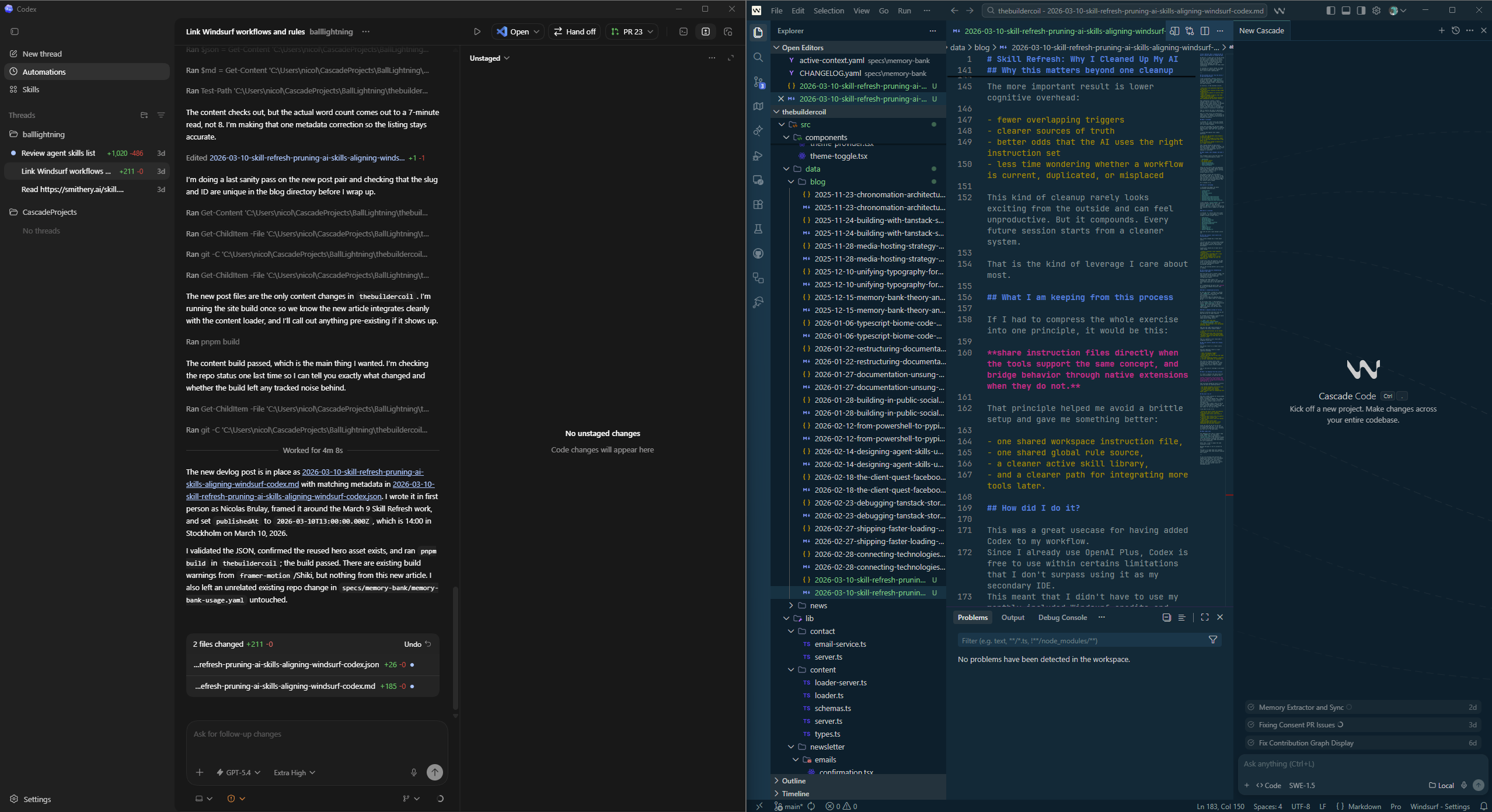
How I reviewed my AI skill library, archived the overlap, refreshed the keepers, and standardized rules and workflows between Windsurf and Codex.
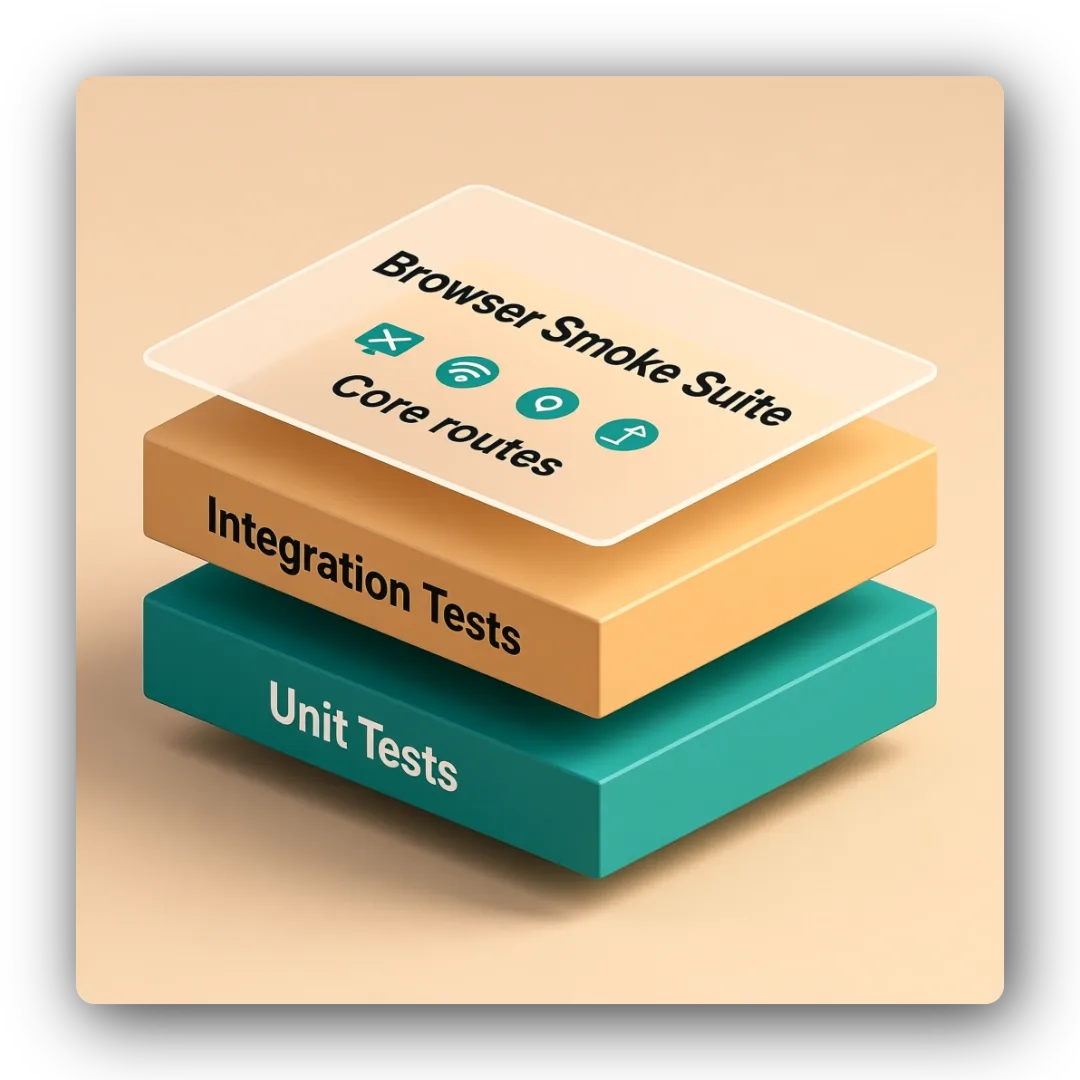
Browser Smoke Suite: Cost-Efficient Route Validation for Shipping API Dojo v2
Issue #17 added a minimal Playwright smoke suite to complement unit/integration coverage. I built a cost-efficient browser test layer for checkpoint validation and future mirror sites.
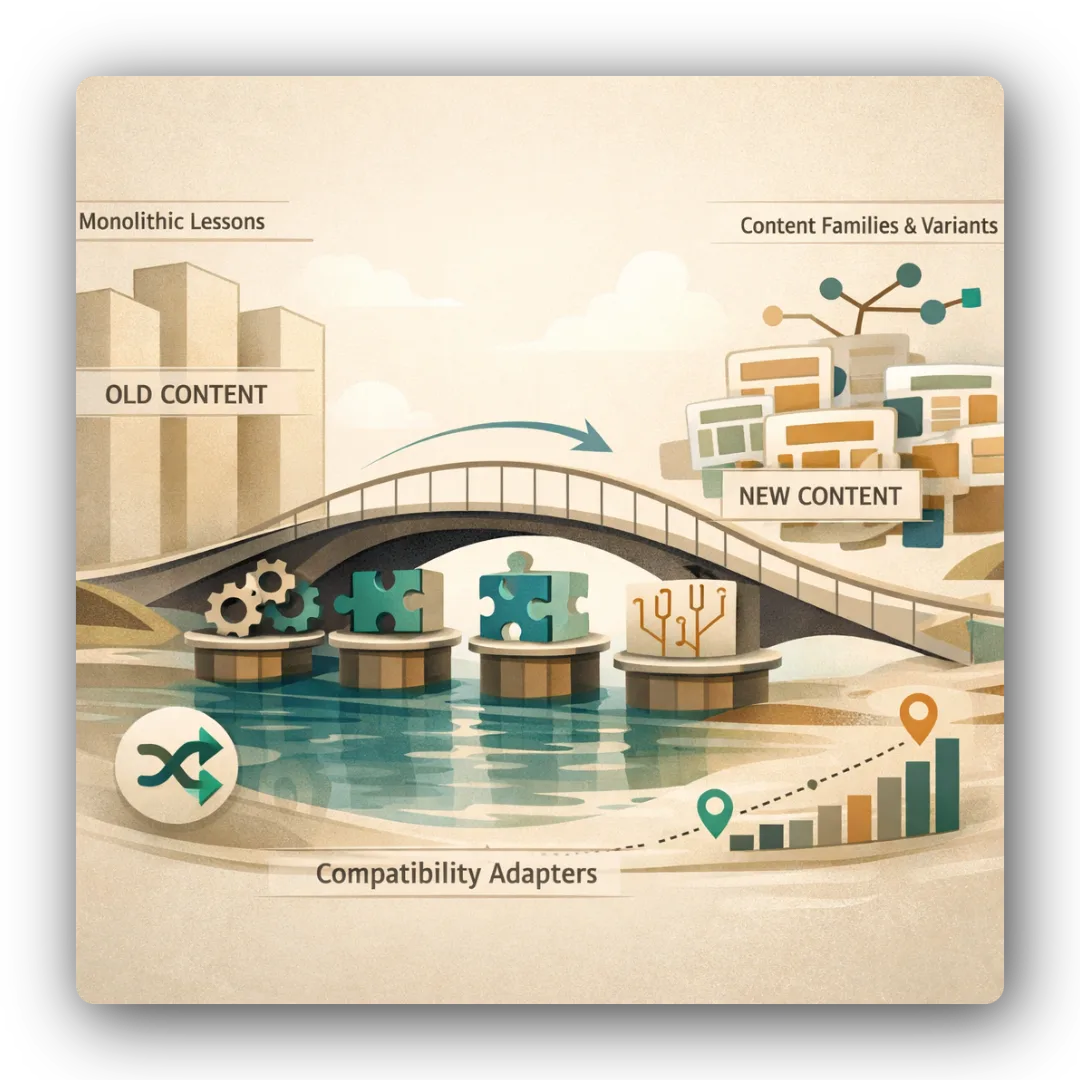
Proof of Concept: Validating Seeded Randomization and Content Families in Shipping API Dojo v2
Issue #8 implemented a proof of concept for minimum viable randomization and content families. I validated MCQ shuffling, lesson drill ordering, scenario sequencing, and SSR-safe behavior under TanStack Start.