
Shipping API Dojo v2: A Foundation for Randomized Learning at Scale
Shipping API Dojo v2: What I'm Building and Why
I'm rebuilding Shipping API Dojo. Not because the v1 is broken—it works fine as a reference site—but because I want it to be more than that.
The direction I'm heading toward is a platform that can deliver randomized, gamefied, repeatable learning experiences. That means content families, seeded randomization, and a full auth/billing/email/domain stack. It's a substantial rebuild, and issue #5 (https://github.com/BallLightningAB/shipping-api-dojo/issues/5) is the umbrella issue tracking the whole chain.
The visible goal is straightforward: expand to 20 lessons, 20 drill families, and 20 scenario families. But the real constraint is how to get there without breaking what already works.
The 20/20/20 curriculum target
The numbers are straightforward: 20 lessons, 20 drill families, 20 scenario families. It's a very extensive curriculum, but it's doable and it leaves room for growth.
- 20 lessons covering REST and SOAP APIs across major carriers
- 20 drill families with stronger explanations and stronger distractors
- 20 scenario families through a deeper scenario-family direction
But the biggest work isn't just writing more content. It's restructuring how content exists.
The content-family model means lessons, drills, and scenarios exist as families with stable IDs and run variants. That's what makes seeded randomization possible without breaking progress tracking—if I complete drill-family-abc, that completion survives whether I saw variant-3 or you saw variant-5.
Minimum viable randomization
The biggest technical shift in v2 is randomization.
v1 has fixed answer orders and fixed drill sequences. That works for reference, but it doesn't work well for practice—if the correct answer is always in slot C, users learn the pattern, not the concept.
v2 introduces minimum viable randomization at three levels:
- MCQ answer order: the correct answer is no longer fixed in one slot
- Lesson drill order: drills shuffle within a lesson based on a seed
- Arena scenario order: scenarios shuffle based on a seed
The key is that this is seeded, not chaotic. Same seed, same order. Different seed, different order. That's what makes progress tracking stable while still giving users varied practice.
Higher-value randomization—review modes, shareable certificates, challenge modes—is tracked separately in issue #10. I'm focusing on the minimum viable version first.
I very purposefully avoid any AI usage at this point, as I want to build a solid foundation first and want to avoid unnecessary running costs.
The content-family data model
Content families are the structural backbone of v2.
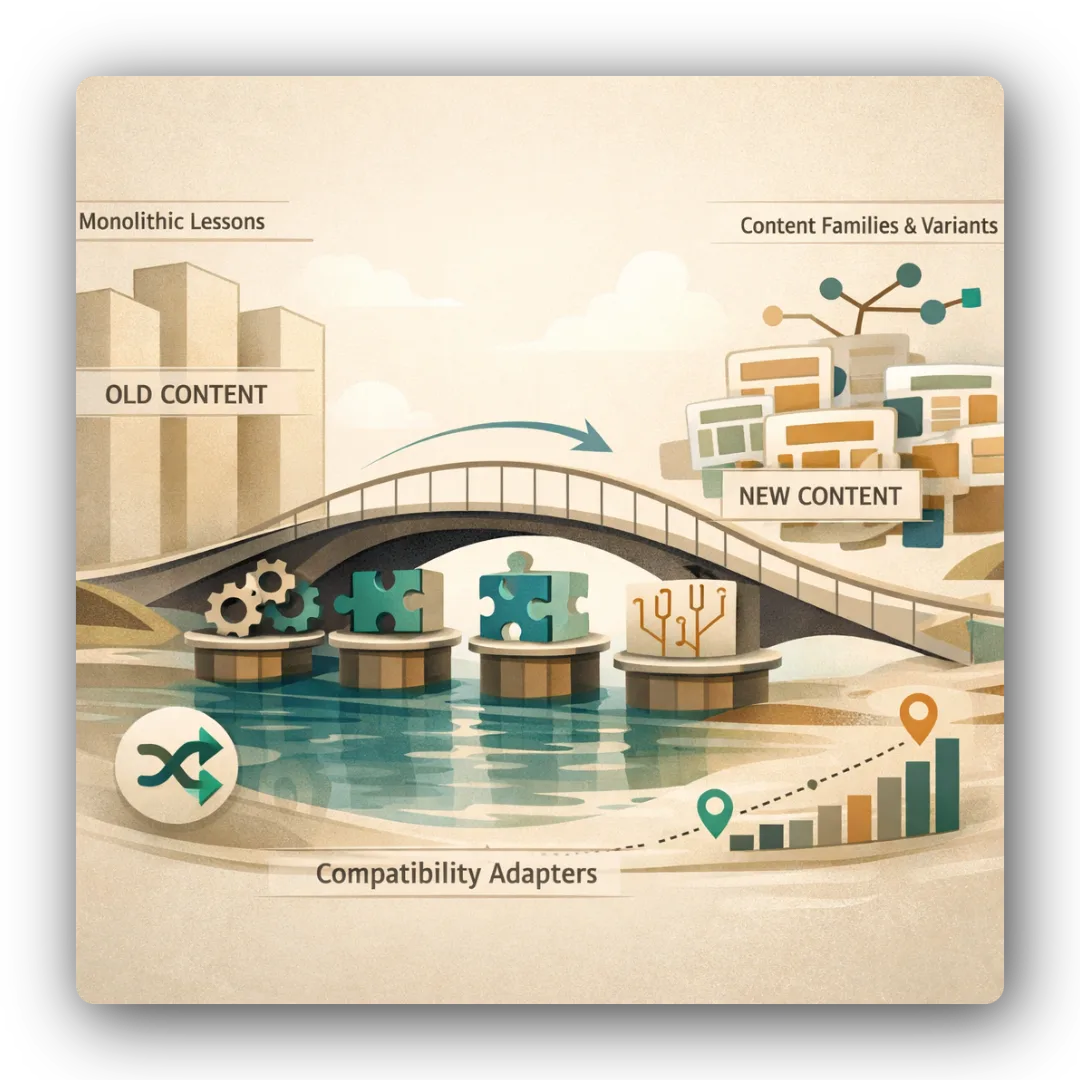
Instead of monolithic lesson files, I'm moving to a model where:
- Lessons, drill families, and scenario families have stable IDs
- Each family can have multiple run variants
- Progress maps to family IDs, not specific runs
- The model is future-compatible with TanStack AI content generation
This is a significant shift from v1. It means more upfront structure in exchange for more flexibility down the line. It also means I can migrate incrementally—compatibility adapters let old and new content coexist during the transition.
The auth, billing, and email foundation
v2 is also the moment Shipping API Dojo becomes a real product, not just a public resource.
That means:
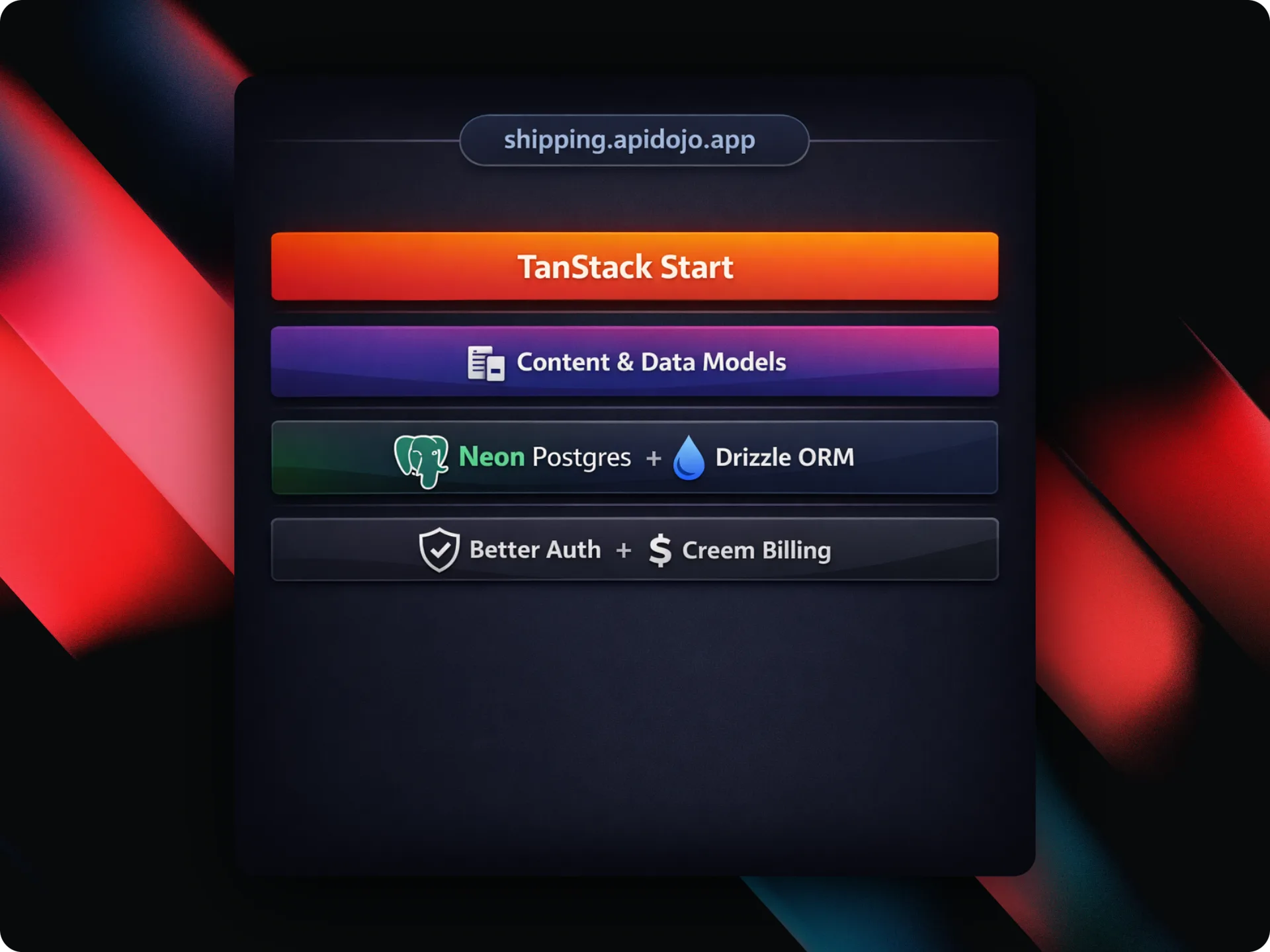
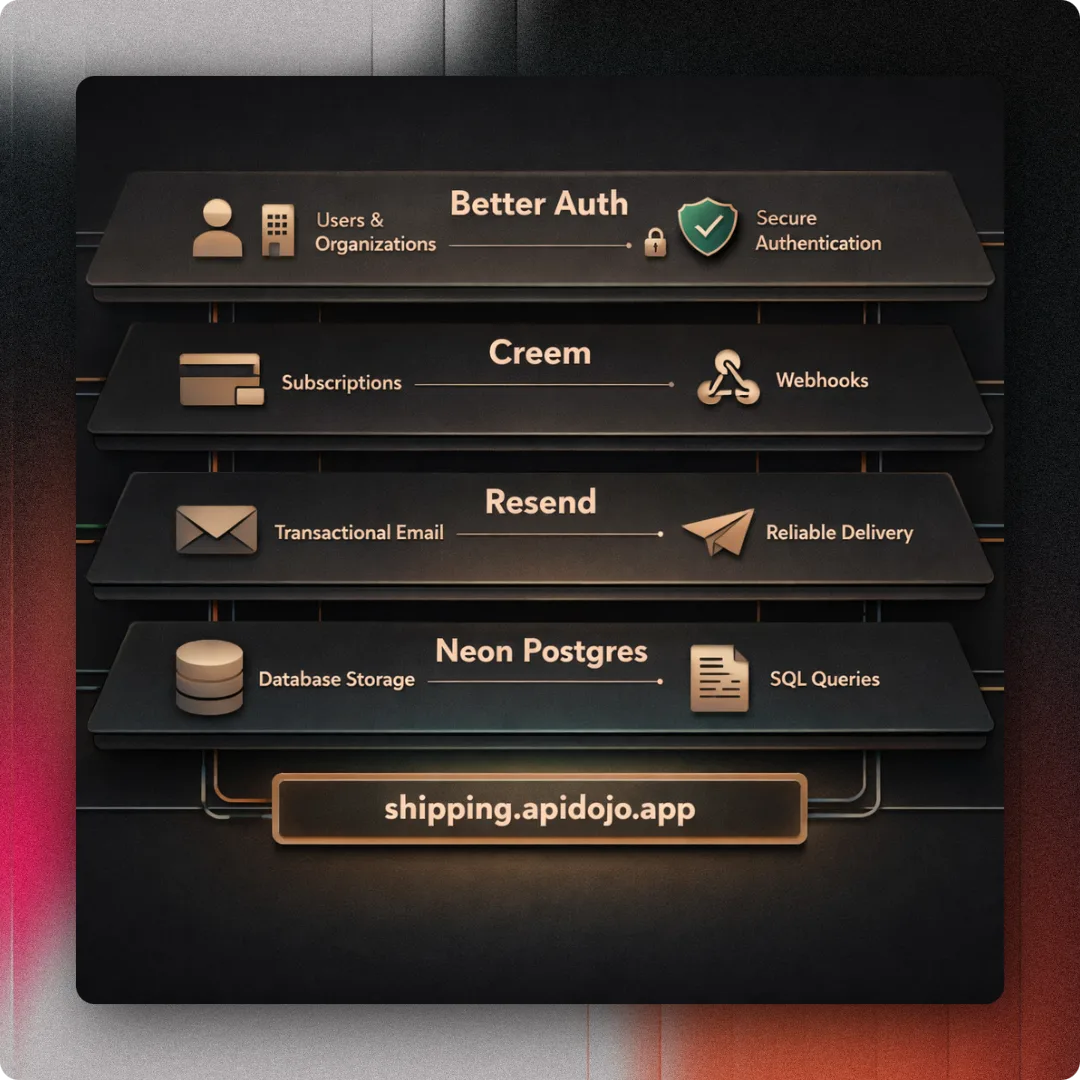
- Better Auth for user accounts, sessions, and organization management
- Neon Postgres with Drizzle ORM for server-authoritative progress tracking
- Creem as the merchant of record for billing and entitlements
- A dedicated Resend account and domain for transactional email
- The shipping.apidojo.app production hostname under the apidojo.app umbrella
The access model follows a clear progression: anonymous sample → signed-in free → Pro (→ Enterprise planned). The public repo remains AGPL-3.0-only, but trademarks and premium materials stay outside the public repo once they become proprietary assets.
SEO-first and SSR-visible
One constraint that doesn't change in v2 is the SEO requirement.
Lessons, wiki pages, and directory surfaces must remain crawlable and SSR-visible. The domain cutover to shipping.apidojo.app is planned as a controlled site move, not an ad hoc rename.
That means randomization has to be implemented carefully. The primary lesson content stays SSR-visible. Only the parts that truly need runtime seeds—answer orders, drill sequences—randomize on the client or in authenticated contexts.
The implementation chain
This umbrella issue tracks the overall direction, but the actual work happens through linked sub-issues:
- Issue #7: Technical scoping for content families, seeded randomization, and gated progress
- Issue #11: Auth, entitlements, billing, email, and domain foundation
- Issue #8: Proof of concept for content families, seeded randomization, and deeper scenarios
- Issue #9: Full content migration and expansion to 20 lessons, 20 drill families, and 20 scenario families
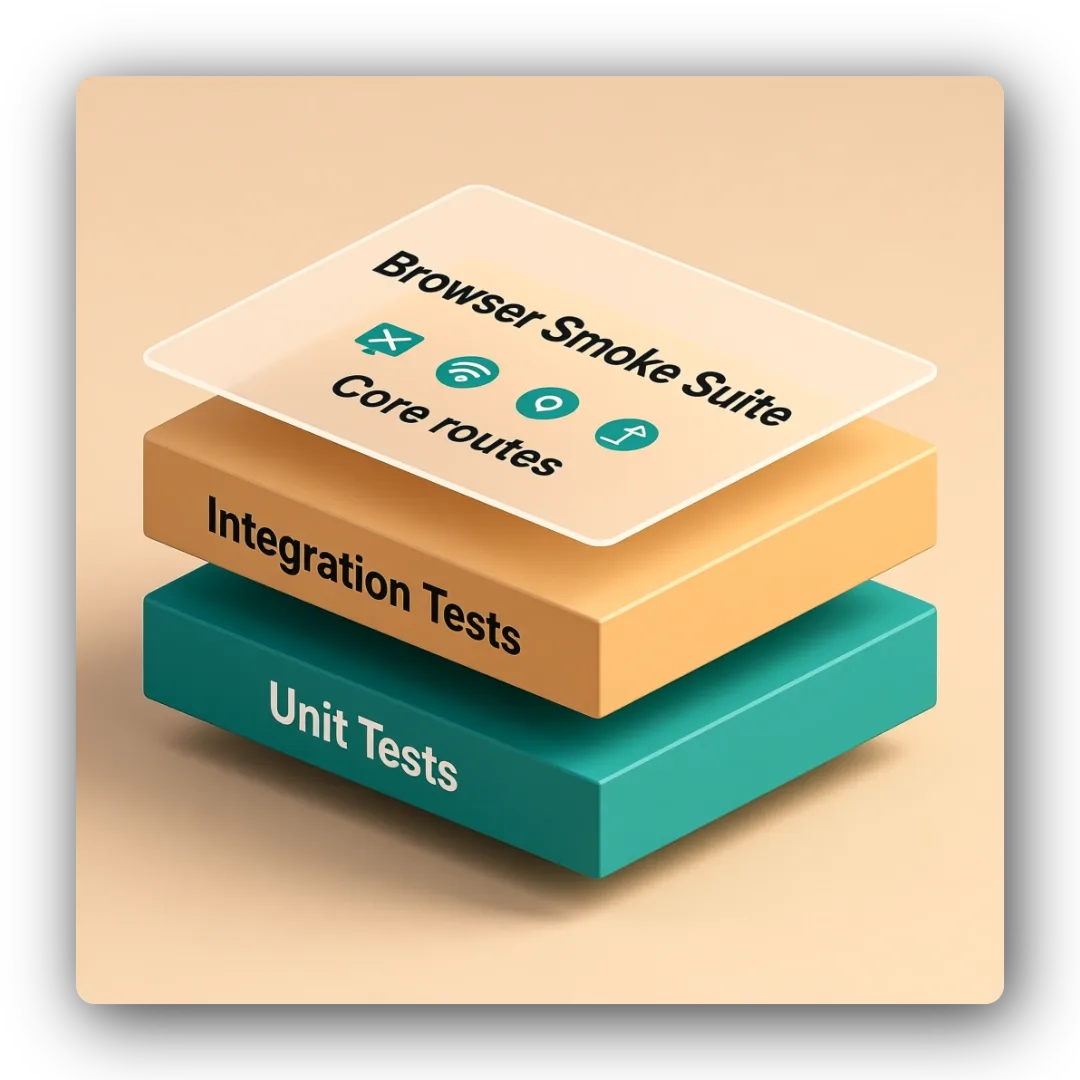
- Issue #17: Cost-efficient browser smoke suite for checkpoint validation
Each issue in the chain maximizes automated testing coverage while still using browser-control validation where route or auth behavior requires it. The goal is a foundation that's both robust and resumable—implementation can pause and resume without losing momentum.
What's next
The v2 rebuild is already in progress. The technical scoping and auth foundation are complete. The proof of concept validated the content-family model and seeded randomization approach. Full content migration is underway.
The remaining work is straightforward in concept but substantial in execution: migrate the remaining lessons to the content-family model, expand to the 20/20/20 target, and validate that the whole system holds together under real usage.
This is the kind of rebuild that only happens once. The foundation I'm building now—content families, seeded randomization, auth/billing/email/domain—will determine how Shipping API Dojo can grow for years to come.
Related Posts
Proof of Concept: Validating Seeded Randomization and Content Families in Shipping API Dojo v2
Issue #8 implemented a proof of concept for minimum viable randomization and content families. I validated MCQ shuffling, lesson drill ordering, scenario sequencing, and SSR-safe behavior under TanStack Start.
Browser Smoke Suite: Cost-Efficient Route Validation for Shipping API Dojo v2
Issue #17 added a minimal Playwright smoke suite to complement unit/integration coverage. I built a cost-efficient browser test layer for checkpoint validation and future mirror sites.
Auth Foundation: Building Better Auth, Creem Billing, and Email Infrastructure for Shipping API Dojo v2
Issue #11 completed the auth, entitlements, billing, email, and domain foundation for Shipping API Dojo v2. Better Auth, Creem, Resend, and the shipping.apidojo.app domain came together.